Overload operation Cutting rebar exceeding the rated diameter, high-strength rebar such as HRB500, multiple rebars with excessive total cross-sectional area, hard steel, embedded parts or hot red steel. Instant impact load causes cracking of the cutter head.
Eccentric and lateral force Rebar is fed obliquely without leaning against the baffle. Worn wear plates lead to swinging of the blade holder. Rebound of short materials creates alternating lateral stress, which induces crack propagation.
Abnormal blade clearance and material jamming Too large or too small clearance between moving and fixed blades, loose blade bolts, material jamming and blocking. The instantaneous impact force concentrates on the stress-concentrated position of the cutter head.
Inadequate lubrication and transmission seizure Insufficient or deteriorated gear oil, blocked oil passages. Bushings or crankshaft overheat and seize, generating huge impact force to break the casting housing.
Casting defects and low-temperature brittleness Inherent defects including sand holes, blowholes and hidden microcracks in the cast housing. The ductility of cast iron drops greatly at low temperature, making it easier to fracture under the same load.
Fatigue damage from long-term impact Continuous cyclic impact during cutting expands tiny cracks gradually. Hidden damage from collision during transportation also causes sudden fracture after long service.
Unstable installation foundation Loose anchor bolts cause severe bouncing of the whole machine during cutting, adding extra vibration impact on the cutter head.
Daily Operation & Maintenance Precautions Rebar Cutter Head
Pre-shift inspection Visually check the cutter housing, bolt holes and corner areas for cracks or oil leakage. Inspect blades for chipping, fasten blade bolts and verify blade clearance. Check gear oil level and quality. Run the machine idle for 30 seconds to check abnormal noise and shaking before formal cutting. Stop using immediately if any crack is found.
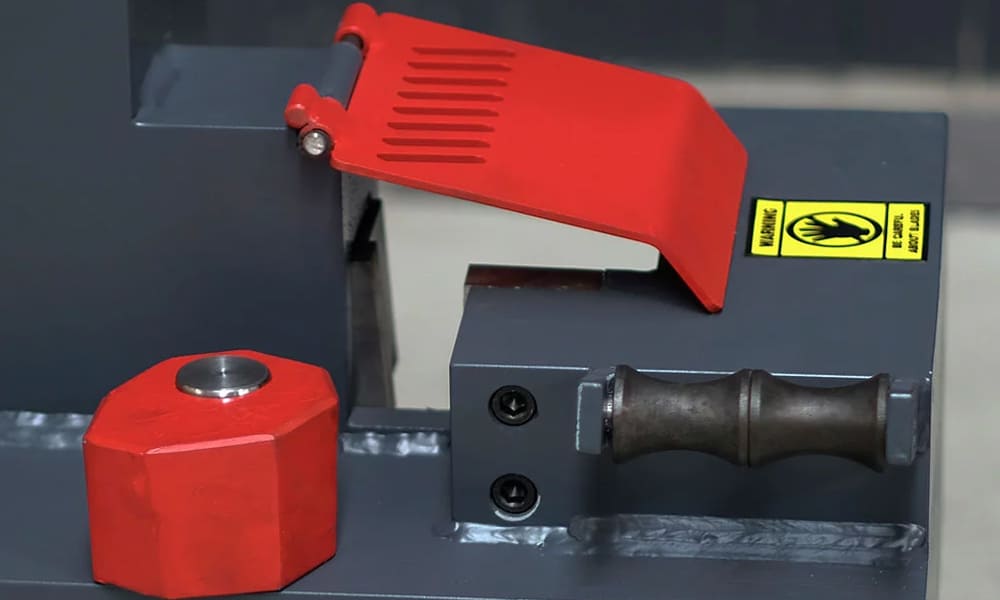
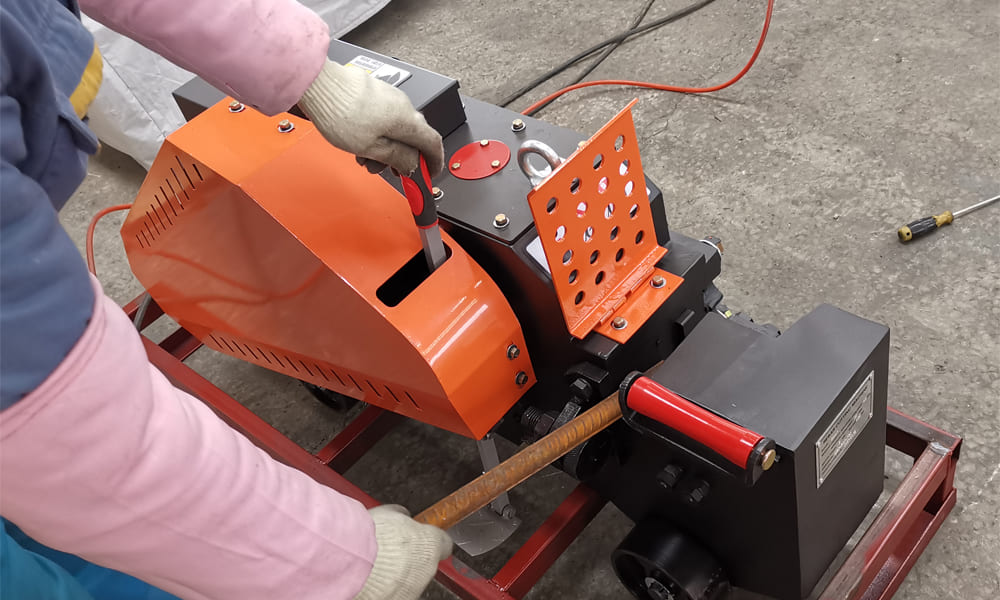
Standard operation requirements Never cut materials out of specification, hard blocks or hot rebar. Keep rebar close to the stopper and feed at the central position of the cutting opening. Use sleeves or fixtures for short rebars to prevent rebound impact. Do not pry steel bars with the cutting opening. Shut down and cut off power once material jams; avoid repeated jogging to force cutting. The safety guard must remain installed during operation.
Regular lubrication and maintenance Replace gear oil on schedule: first replacement after 1 month for new machines, then every 2–3 months or 200 working hours. Add lubricating oil to grease points each shift. Clean steel scraps around the blade seat every shift. Replace worn wear plates, copper bushes, connecting rods and crankshaft in time. Retighten all bolts of the cutter head and base periodically.
Cold weather operation Perform idle running preheating for several minutes in low-temperature environments before cutting large-diameter rebars to reduce cold brittleness risk.
Storage Power off and clean the machine after work. Store in dry places; avoid outdoor exposure and rain corrosion, which accelerates crack expansion.