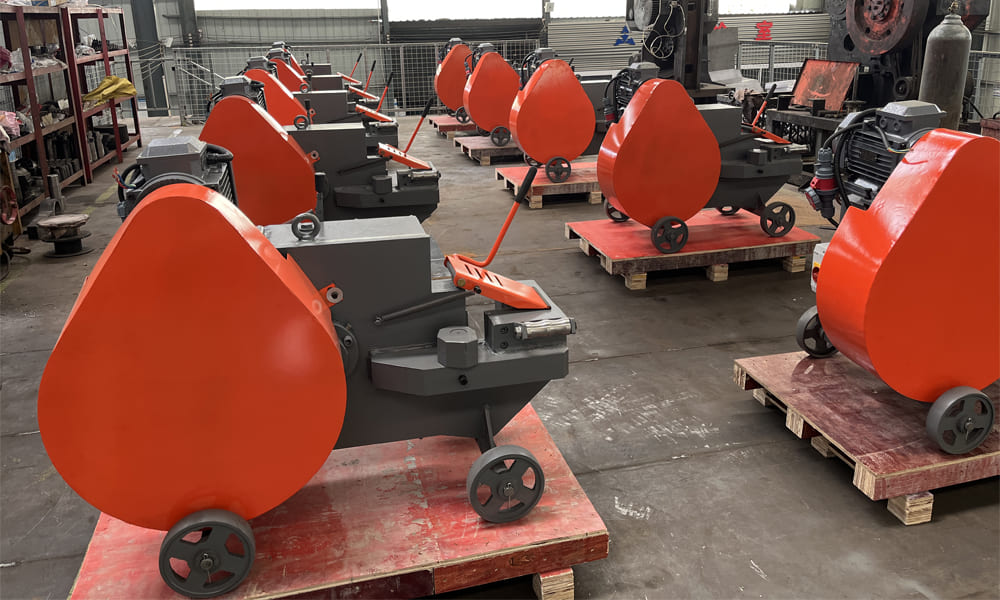
1. C52 Steel Bar Cutter Core Metric: Cutting Tonnage
In the industrial field, the lifespan of C52 Steel Bar Cutter is usually measured not in “years,” but in the “total tonnage of rebar cut cumulatively.” This is a more scientific and objective indicator.
- Low-end/Lightweight Machines: Possibly designed for a lifespan of 10,000 tons.
- Mid-range/High-end Machines: Mainstream brands typically have a design lifespan of over 20,000 tons.
Conversion Example: Assuming a machine cuts an average of 10 tons of rebar per day, working 250 days a year, the annual cutting volume is 2,500 tons. A machine with a design lifespan of 20,000 tons can ideally operate for approximately 8 years. However, this is only a theoretical calculation; in reality, maintenance and operating conditions have a significant impact.
2. Key Factors Affecting Lifespan
Lifespan primarily depends on manufacturing quality and usage conditions.
A. The Equipment Itself
Structural Design and Materials: Whether gears, shafts, and blades are made of high-strength alloy steel and heat-treated; whether the machine body is cast steel or ordinary cast iron; the precision and rigidity of the transmission system.
Brand and Manufacturing Process: Well-known brands typically use more robust materials, employ more precise processes, have more rational designs, and have a longer lifespan.
Type:
- Hydraulic Cutting Machine: Low impact, smooth operation, good overload protection, generally longer lifespan, and relatively simple maintenance.
- Mechanical (Mechanical Cam/Crank-Connecting Rod): Robust structure, high efficiency, but high impact force, requiring more careful maintenance.
B. Usage Conditions
This is the main reason for the significant differences in lifespan.
- Maintenance (Most Important!):
Regular Lubrication: Strictly follow the instructions to add appropriate lubricating oil/grease to bearings, gears, slide rails, etc. Poor lubrication is the culprit for premature wear.
Blade Maintenance: Use sharp blades and adjust or replace them promptly. Dull blades will significantly increase the machine’s load.
Cleaning and Inspection: Regularly clean away metal shavings and dust, and check for loose fasteners.
- Workload:
Overloading: Long-term cutting of steel bars exceeding the rated diameter will greatly shorten the machine’s lifespan.
Work Schedule: Is it intermittent work or continuous full-load work for 24 hours? The latter will inevitably have a shorter lifespan.
- Operating Standards:
Is the blade aligned to avoid lateral stress?
Is the rebar positioned correctly to avoid “blade chipping”?
Operator habits greatly affect machine performance.
- Working Environment:
Use in dusty, humid, or corrosive environments (such as near the sea) will accelerate component corrosion and wear if proper protection and maintenance are not implemented.
3. Signs of End-of-Life A cutting machine doesn’t suddenly “die,” but rather gradually “ages.” Its end-of-life typically manifests as:
Severely reduced precision: The cut surface is skewed, with large burrs, failing to meet construction requirements.
Failure of critical components: Gears, crankshafts, bearings, and other core transmission components wear beyond limits, resulting in abnormal noises, shaking, and excessive temperature rise; even replacement cannot restore original performance.
Frame deformation or cracking: The machine body develops irreparable deformation or cracks, posing safety hazards.
Poor maintenance economy: Subsequent maintenance frequency is too high, with maintenance costs approaching or exceeding the equipment’s residual value.
4. How to Maximize Service Life?
Correct Model Selection: Choose a model with an appropriate margin in rated capacity based on the diameter and frequency of the most frequently cut rebars. Avoid using a machine underpowered for its capacity.
Strict Maintenance: Establish and implement a regular maintenance system, ensuring lubrication, cleaning, inspection, and adjustment are carried out effectively. Maintenance records reflect equipment condition better than service life.
Standardized Operation: Train operators to prevent improper operation.
Use Original or High-Quality Parts: Especially for blades, critical bearings, and seals.
Improve the Working Environment: Use the machine in a dry, level location, and protect it from dust and rain.
Summary: A qualified, well-maintained rebar cutter, used under moderate load, can have an actual service life of 8 years or more. However, a low-quality brand machine, overloaded, and poorly maintained may suffer severe wear and tear and premature failure within just two or three years.