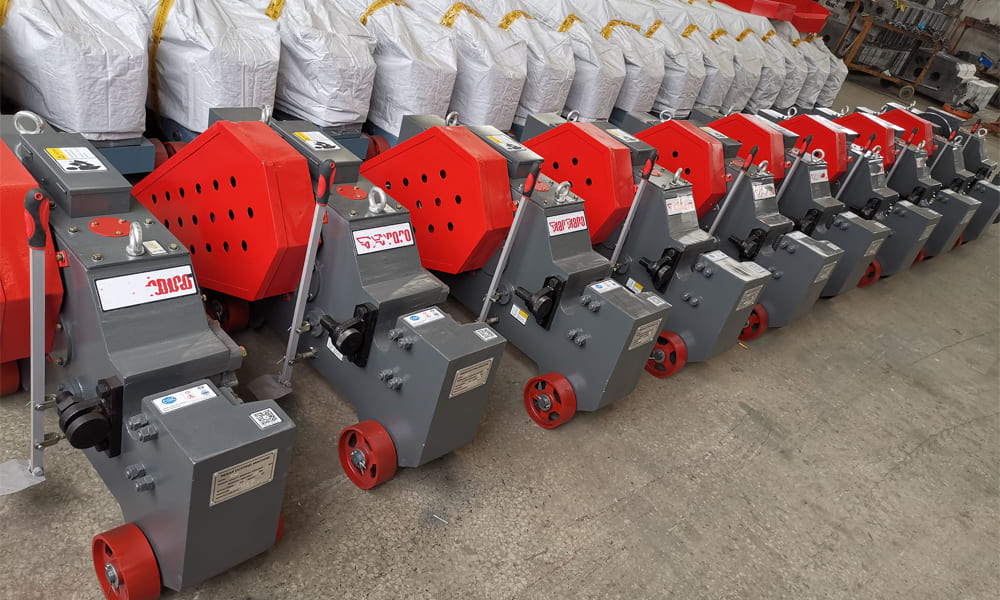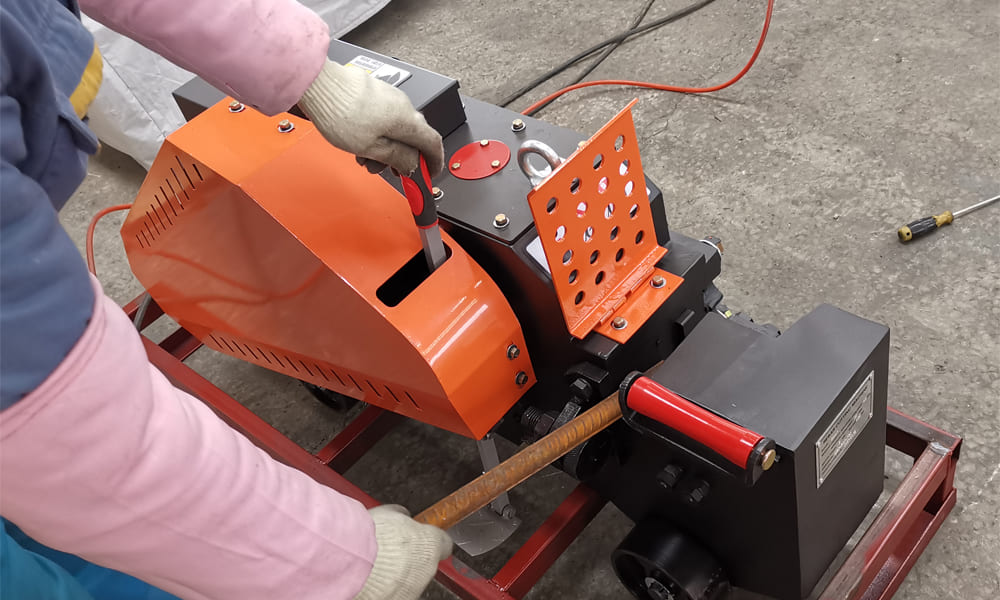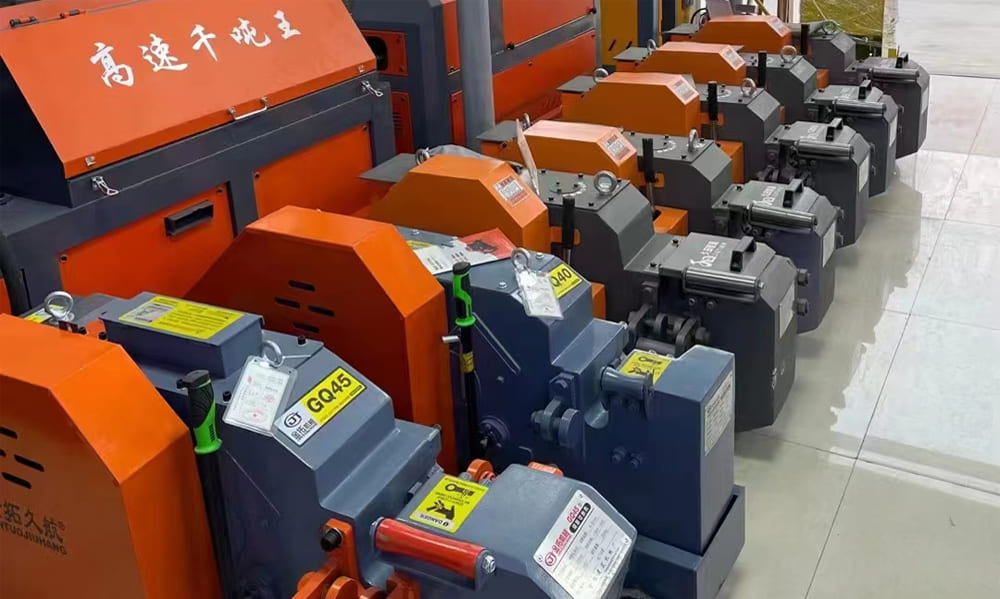
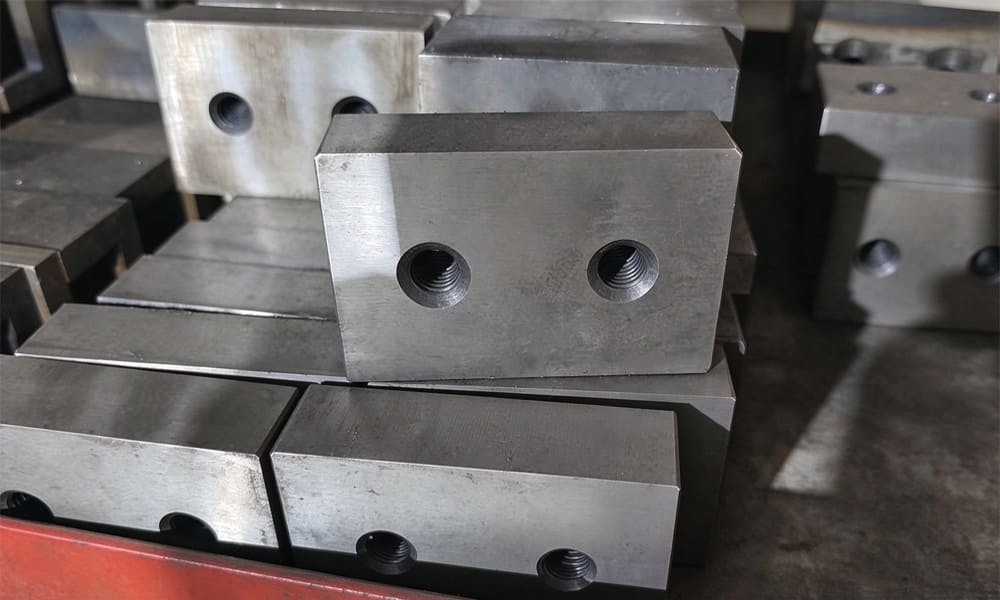
Core trade-off: Wear resistance ↔ Impact toughness. Rebar cutting is an impact shearing application. Overly hard blades chip easily; softer ones roll the cutting edge.
- T10A Carbon Tool Steel Hardness: HRC54–57 Features: Low cost, easy machining. Poor hardenability & heat resistance, marginal toughness; inconsistent heat treatment results. Application: Small job sites, light-duty cutting, plain round bar ≤Φ12. Not suitable for HRB400 deformed bar or continuous heavy production. Disadvantages: Prone to edge rolling and tip chipping, short service life.
- 9CrSi Alloy Tool Steel (Economical domestic mainstream) Hardness: HRC55–59 Features: Better hardenability than T10A, balanced toughness, easy regrinding, cost-effective. Application: General HRB400 rebar for medium & small construction sites, intermittent operation on GQ40 cutters. Disadvantages: Moderate wear resistance; fast wear under continuous heavy cutting. Service life roughly 1/3 of Cr12MoV.
- 6CrW2Si Shock-Resistant Alloy Tool Steel Hardness: HRC56–60 Features: Tungsten improves impact toughness; much better chipping resistance than 9CrSi and Cr12MoV. Medium wear resistance. Application: Mixed scrap rebar, impure stock, frequent switching between different bar sizes, high impact conditions. Disadvantages: Lower wear resistance than Cr12MoV, higher unit price.
- Cr12MoV Cold Work Die Steel (SKD11 / 1.2379)【Standard export grade】 Hardness: HRC58–62 Features: Excellent wear resistance, low quenching deformation. Relatively brittle, sensitive to heavy impact and material jamming. Application: Stable mass production of HRB400 rebar, GQ45/GQ50 fixed production lines with consistent bar sizes. Disadvantages: High risk of block chipping if clearance is incorrect or cutting hard/scrap steel; not fit for impure stock.
- DC53 Modified Cold Work Die Steel (Upgraded SKD11) Hardness: HRC58–62 Features: Improved toughness based on Cr12MoV; wear performance close to SKD11 with better anti-chipping property. Application: HRB500 high-strength deformed bar, wire rod, hard rebar, high-end export cutters. Disadvantages: Higher price than Cr12MoV.
- H13 Hot Work Die Steel (SKD61 / 1.2344)【Heavy-duty & high-strength preferred】 Hardness: HRC50–55 (not tempered to high hardness) Features: Best toughness, good thermal fatigue resistance & red hardness; resists softening from heat in continuous cutting. Outstanding chipping resistance. Application: HRB500, large-diameter rebar, high-speed cutting lines, scrap recycling, frequent continuous shearing. Disadvantages: Lower wear resistance than Cr12MoV at equal hardness, premium price.
- 45# Carbon Structural Steel (Low-end budget option, not recommended for deformed bar) Hardness: HRC40–48 Features: Very cheap, edges roll quickly. Application: Occasional cutting of thin plain round bar only.
Quick Selection Guide
- Small job site, tight budget: 9CrSi
- Standard mass HRB400 cutting, regular export model: Cr12MoV (SKD11)
- Frequently cut scrap/mixed rebar, high chipping risk: 6CrW2Si
- HRB500 high-strength rebar, heavy-duty line, reduce customer complaints: DC53 / H13
Supplementary Notes (For overseas customer inquiries)
- For the same grade: Forged stock > Rolled stock. Vacuum heat treatment is critical for service life. Many cheap blades only undergo ordinary quenching and fail even if material chemistry meets specs.
- Higher hardness does NOT equal better performance. For impact shearing, Cr12MoV over HRC62 carries a high chipping risk.
- Blade clearance, backing block fit and seat contact condition often affect chipping more than the blade material itself.