
Automatic Pressure Roller Rebar Spiral Machine
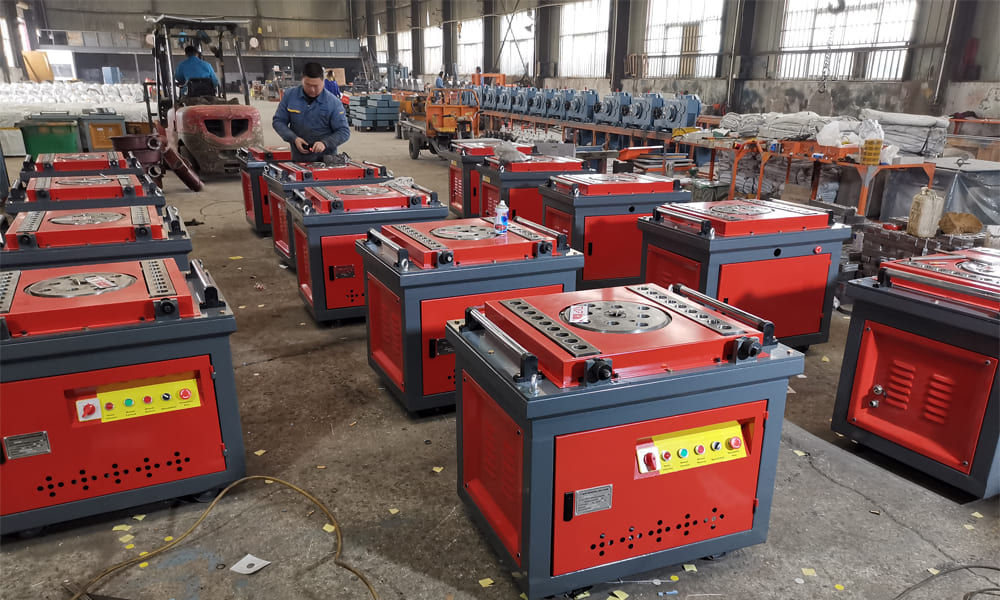
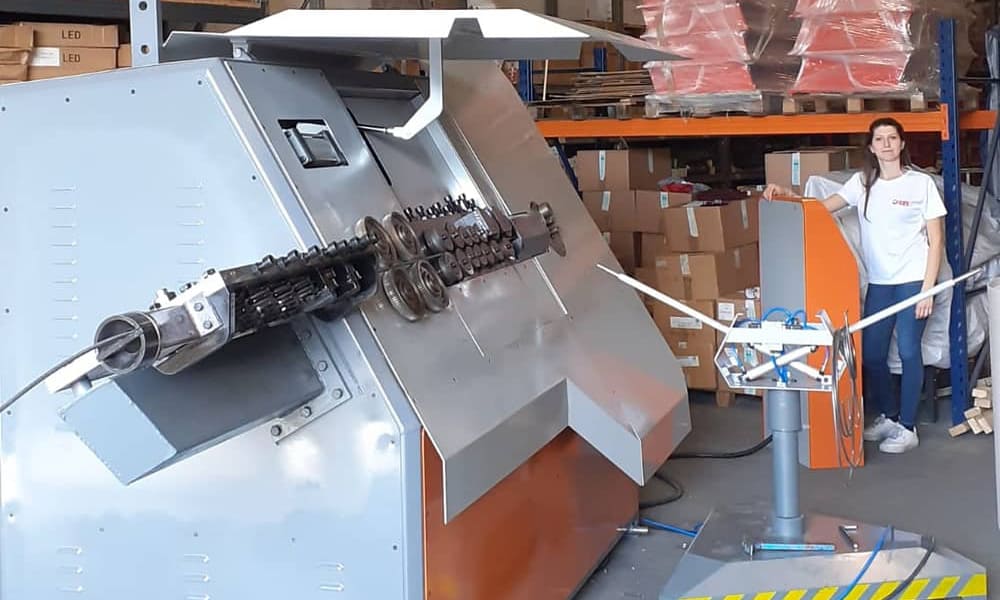
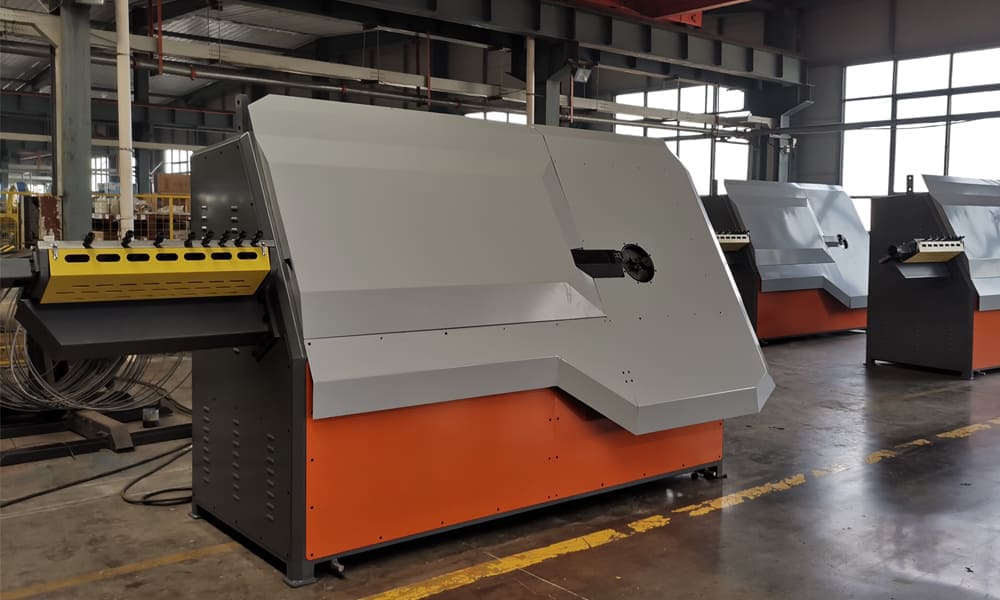
An Automatic Pressure Roller Rebar Spiral Machine is a advanced piece of equipment used in construction, bridge, tunnel, and prefabrication industries to bend straight steel reinforcement bars (rebar) into precise arcs, circles, or complex shapes with a high degree of automation, accuracy, and efficiency.
1. Rebar Spiral Machine Core Function
Its primary function is to automate the process of creating curved rebar components, which are crucial for reinforced concrete structures with non-linear geometries. It replaces manual and semi-automatic bending methods, significantly improving productivity and consistency.
2. Spiral Bending Machine Key Components
-
Robust Frame: A heavy-duty structural frame designed to withstand the high torsional forces and stress generated during the bending process without deformation.
-
Power System:
-
Hydraulic Drive: Utilizes a hydraulic power unit. Ideal for bending large-diameter (typically above Φ20mm) and high-strength rebar due to its immense power.
-
Servo-Electric Drive: Utilizes servo motors and gear reducers. Provides superior precision, faster response, and is more energy-efficient. Best for medium to small-diameter rebar and complex shapes.
-
-
Bending Head (The Working Core):
-
Central Bending Wheel (Drive Wheel): The main, powered wheel that provides the driving force. Its groove matches the rebar diameter, and its size determines the minimum possible bend radius.
-
Pressure Rolls (Idler Wheels): These are adjustable, non-powered rollers. Typically, there are two or more. They apply counter-pressure, pinching the rebar against the central wheel and guiding it to form the desired curve. Their position is dynamically controlled to create variable radii.
-
-
CNC Control System: The “brain” of the machine. An operator inputs parameters (e.g., bend radius, bend angle, rebar diameter, arc length) via a user-friendly touchscreen interface. The CNC system then automatically calculates and executes the movements of the bending wheel and pressure rolls.
-
Automatic Feeding System (Common): A set of motorized rollers that accurately measures and feeds the straight rebar into the bending head, enabling fully automated, continuous operation.
-
Auxiliary Systems: Include safety guarding (to protect the operator), and sometimes a lubrication system to reduce wear on the tools and rebar.
3. How It Works (The Principle)
The process is akin to “metal rolling” or “forming.”
-
Loading: The end of the straight rebar is inserted between the central bending wheel and the pressure rollers.
-
Programming: The desired shape parameters are entered into the CNC system.
-
Bending:
-
The central bending wheel rotates.
-
The servo/hydraulic system moves the pressure rollers to their programmed positions, applying precise force to clamp the rebar against the central wheel.
-
As the central wheel continues to rotate, the rebar is pulled and wrapped around it, undergoing permanent plastic deformation to take its shape.
-
By dynamically and precisely adjusting the position of the pressure rollers during the rotation, the machine can produce not just simple circular arcs but also spirals, S-shapes, and other complex geometries with variable radii.
-
-
Unloading: Once the bend is complete, the pressure rollers retract, and the finished curved rebar is removed, either manually or by an automated arm/conveyor.
4. Key Features & Advantages
-
High Precision: CNC control ensures every bent piece is identical, meeting strict engineering specifications and improving construction quality.
-
High Efficiency: Dramatically faster than manual bending, ideal for high-volume production runs and large-scale projects.
-
Great Flexibility: One machine can quickly switch between different bending programs to produce a vast array of shapes and diameters with minimal downtime.
-
Reduced Labor Intensity: Operators are only required for loading, unloading, and programming, eliminating heavy and repetitive physical work.
-
Improved Safety: Integrated safety guards and interlock systems minimize the risk of operator injury from moving parts.
5. Primary Applications
-
Construction: Curved beams, arches, circular columns (spirals), and dome structures.
-
Bridge Engineering: Circular hoop reinforcement for piers, curved girders.
-
Tunneling & Precast: Segment reinforcement for tunnel boring machines (TBM), lattice girders for initial tunnel support.
-
Heavy Industry: Foundations for large machinery, wind turbine bases, shipbuilding, and transmission towers.
6. Considerations for Selection/Purchase
-
Processing Range: Define the maximum bar diameter and minimum bending radius you need to handle.
-
Drive Type: Choose between Hydraulic (for power/strength) and Servo-Electric (for precision/energy savings).
-
CNC System: Select a machine with an intuitive, reliable control system from a manufacturer with good technical support.
-
Machine Rigidity: A sturdy frame and bending head are critical for durability, accuracy, and handling high stresses.
-
Brand & After-Sales Service: Choose a reputable manufacturer that offers reliable commissioning, training, and spare parts availability.