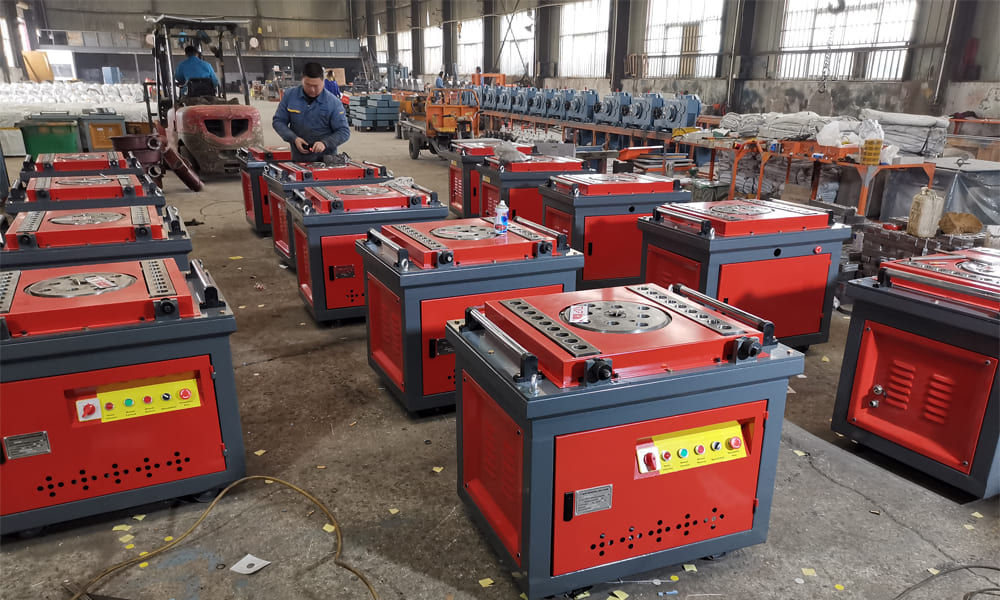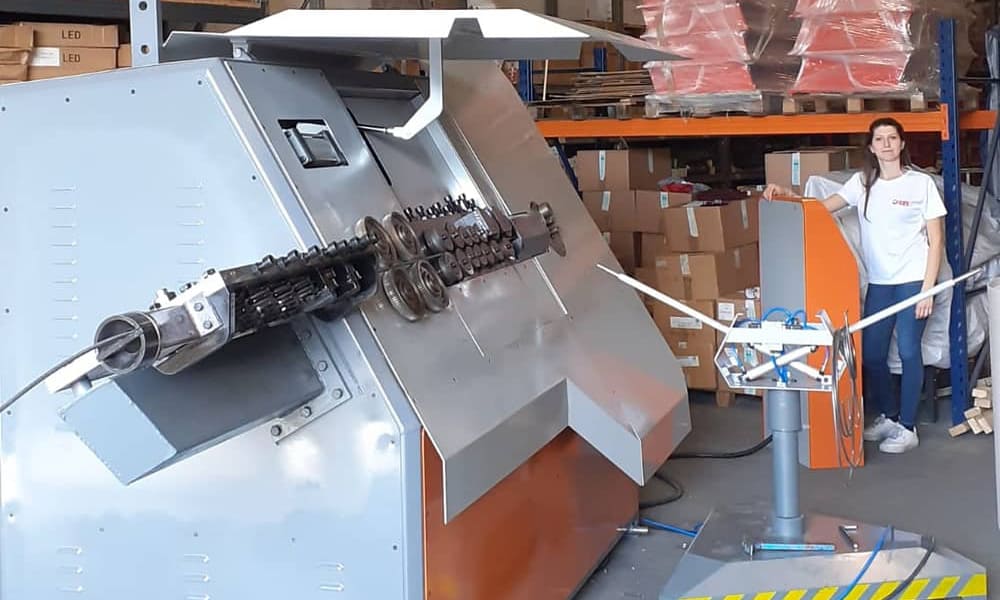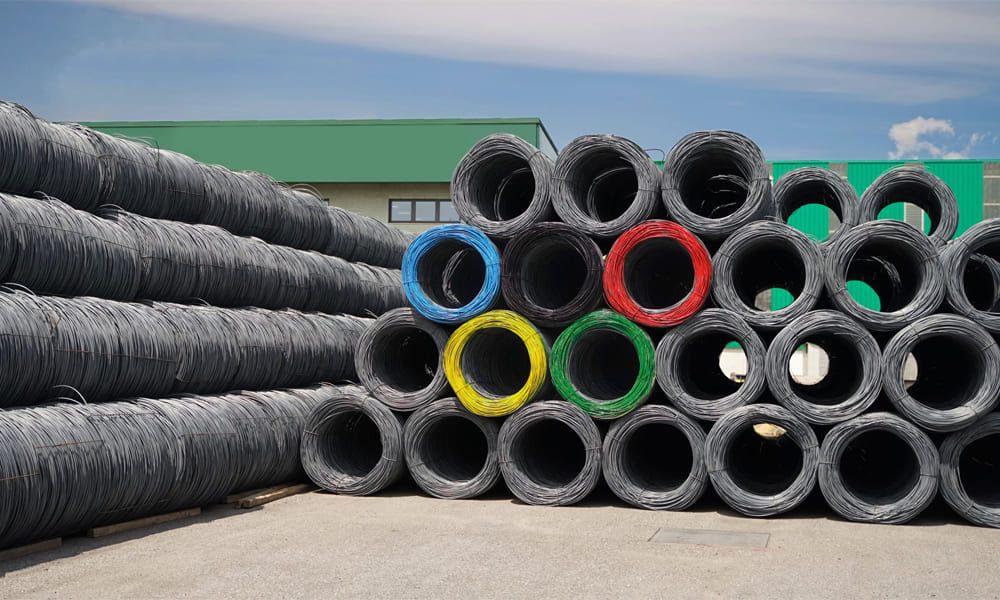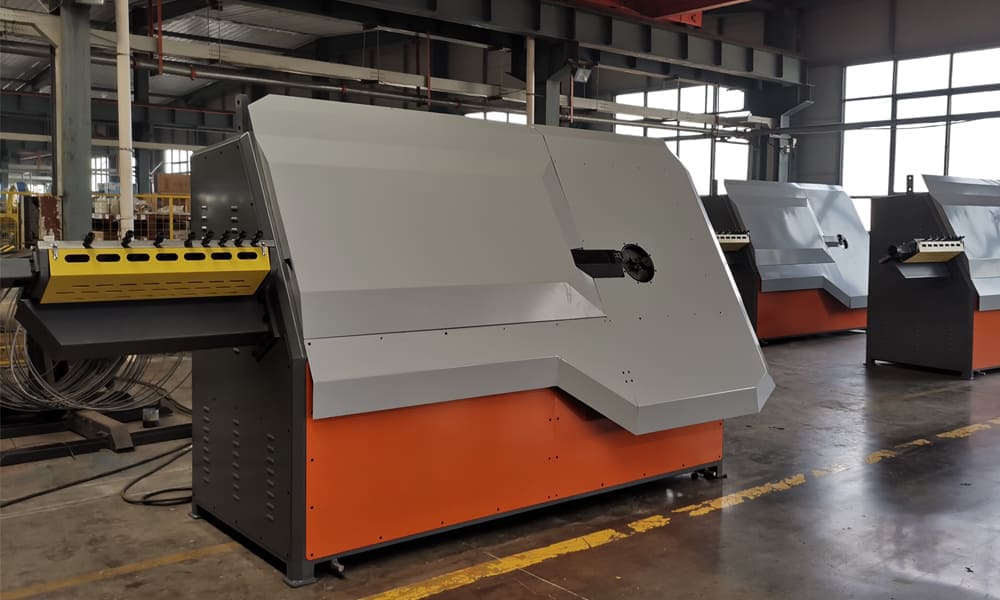
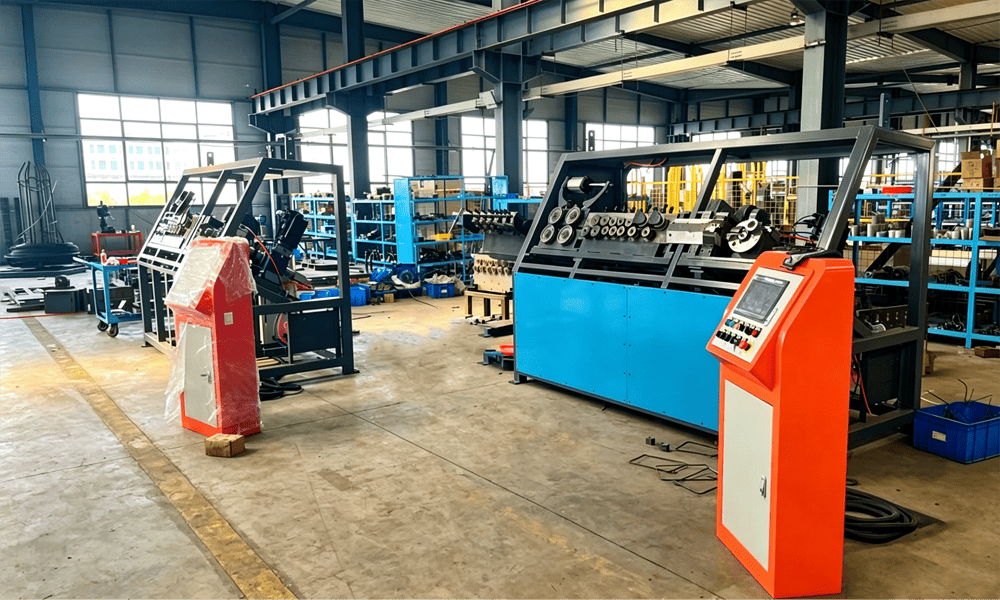
With the rapid development of the construction industry, traditional manual rebar bending methods can no longer meet the demands of large-scale, high-precision and high-efficiency engineering projects. The automatic rebar bender, as a highly intelligent and automated construction machine, has gradually become core equipment on modern construction sites. It effectively solves the drawbacks of low efficiency, poor accuracy and high labor dependence in manual operation, bringing revolutionary changes to steel bar processing work.
The automatic rebar bender boasts prominent core advantages, among which high precision and stable consistency are the most outstanding. Equipped with advanced PLC intelligent control systems and precise positioning devices, the machine can accurately control bending angles, lengths and shapes according to preset program parameters. Different from manual bending that is prone to errors due to human fatigue and operational differences, this equipment keeps the error of finished rebar products within a tiny range, completely conforming to engineering construction standards. Meanwhile, it supports customized bending of various complex shapes, including stirrups, curved bars and special-shaped steel bars, with strong compatibility and stable operation, greatly reducing material waste caused by unqualified bending.
In terms of application purposes, this machine has extremely wide versatility and covers almost all scenarios requiring steel bar processing in the construction field. It is widely used in residential building construction, commercial complex projects, bridge and tunnel engineering, highway infrastructure and water conservancy projects. Whether it is small-batch and multi-type rebar processing for small construction sites or high-volume repetitive bending operations for large-scale key projects, the automatic rebar bender can adapt perfectly. In addition, it can process steel bars of different specifications and diameters, meeting the diversified processing needs of different engineering links and greatly improving the standardization level of on-site construction.
Saving human resources is another major highlight of the automatic rebar bender. Traditional manual rebar bending requires 3 to 5 skilled workers to cooperate to complete a fixed workload, and long-term high-intensity manual labor is easy to cause physical fatigue, leading to frequent personnel turnover. In contrast, an automatic rebar bender only needs one ordinary operator to complete feeding, parameter setting, operation monitoring and material collection work. It replaces the heavy manual bending work, greatly reducing the number of on-site operators. This not only cuts down labor recruitment, training and salary costs for construction enterprises, but also avoids construction delays caused by insufficient workers or unskilled operation, optimizing the human resource allocation of construction projects.
In terms of work efficiency, the equipment shows an overwhelming advantage over manual operation. Manual bending is slow and affected by human status, with limited daily processing capacity. The automatic rebar bender operates continuously and stably, with a fast transmission and bending speed. High-efficiency models can process hundreds of steel bars per hour, and the daily output is several times that of manual work. Moreover, the machine can store multiple sets of bending programs, realizing one-click switching of different processing specifications, eliminating the time loss of repeated debugging and measurement in manual operation. Its continuous and automated working mode shortens the cycle of steel bar processing procedures, effectively accelerating the overall progress of construction projects and creating greater economic benefits for construction enterprises.
In conclusion, the automatic rebar bender integrates high precision, wide applicability, labor saving and high efficiency. It makes up for various deficiencies of traditional manual bending, promotes the intelligent and standardized upgrading of construction steel bar processing, and has become an essential piece of equipment for modern construction engineering. With the continuous progress of construction machinery technology, automatic rebar benders will play a more important role in future infrastructure construction.