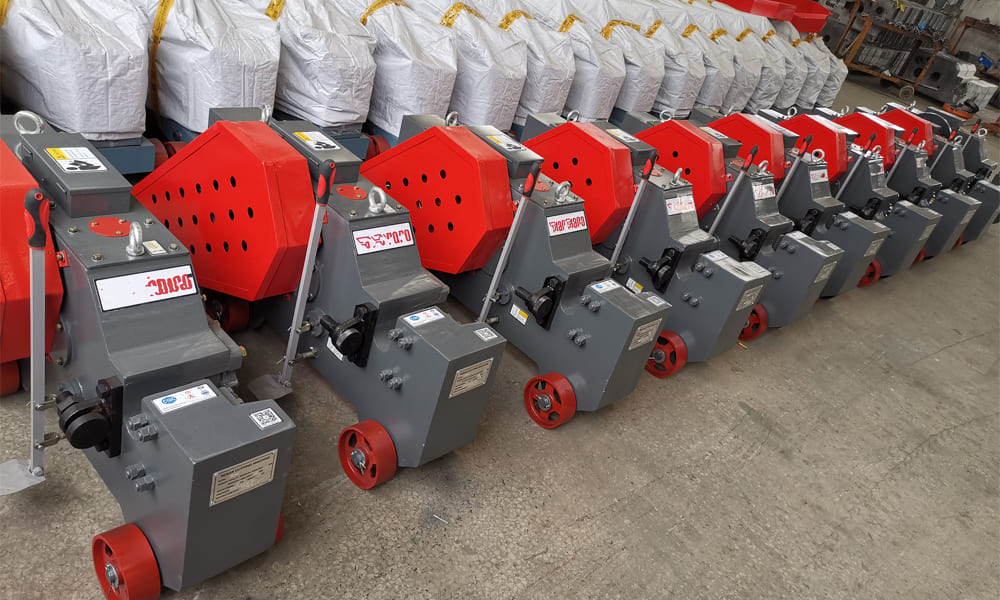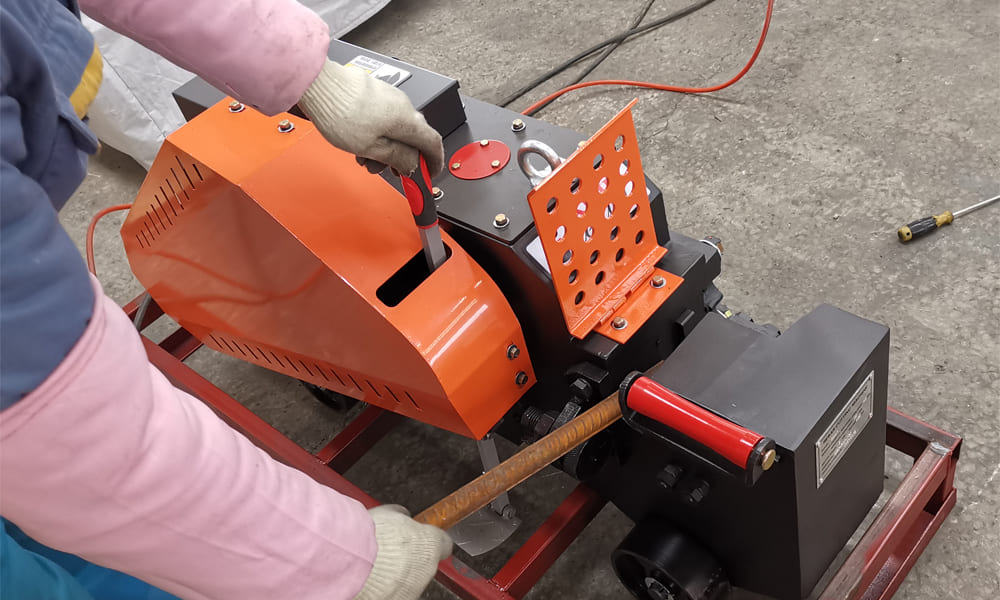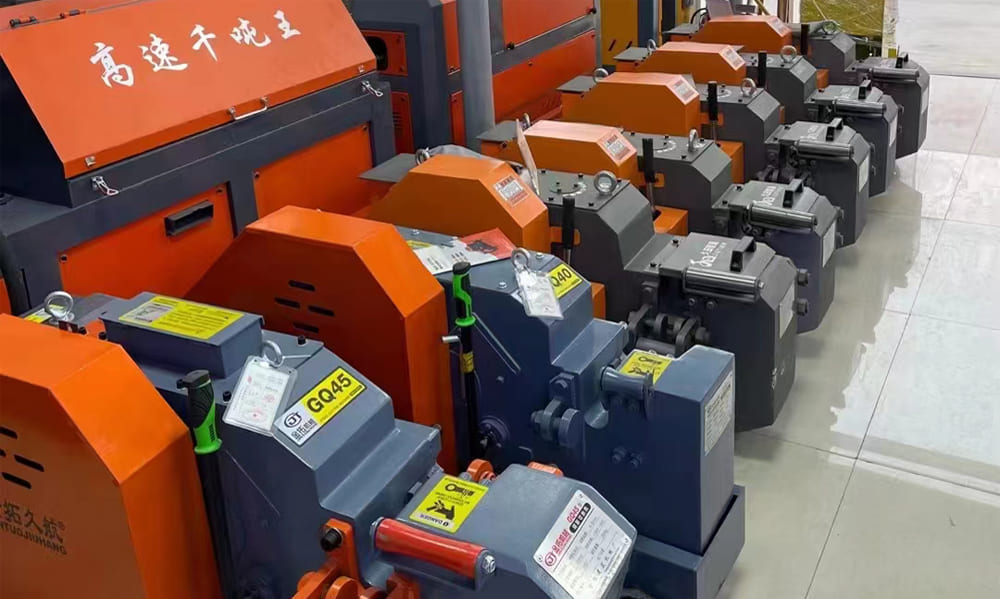
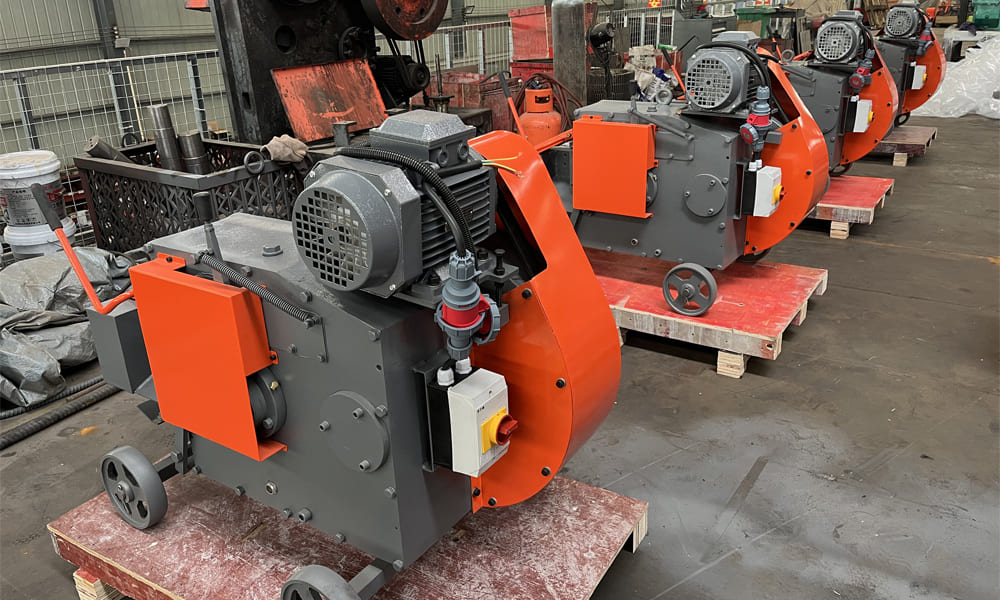
Italy Rebar Cutting Machine: Here are the typical differences between rebar cutting machine made in China vs those made in Italy. As always, specifics depend on the particular models and manufacturers, but these are broad patterns and trade-offs to watch out for. If you tell me exact specs (cutting capacity, automation, budget) I can compare side-by-side too.
What Italian Rebar Cutting Machines Offer (Strengths)
From what I found, some Italian models have the following features:
-
High capacity: machines built to cut single or multiple bars, often large diameters, heavy rebar. For example, the Italian C52 model cuts a single 44 mm bar at 60 kg/mm² strength; multiple bars of smaller diameters.
-
Robust construction: cast alloy or reinforced frames, hardened steel blades, durable bearings/gears. Machines are often designed for continuous heavy use.
-
Precision & safety: blades with multiple edges, safety interlocks, compliance with European standards (CE, ISO), proper guarding and protections. Clean, perpendicular cuts, low burrs.
-
Maintenance / service: designed for easier access to wear parts, with spare parts, etc. Italian machines often use higher grade materials perhaps more expensive, but maintain performance over time.
-
Features & options: many Italian machines offer more advanced options (e.g. combined machines that both cut and bend; cutting carriages or guides for aligning bars; automatic feed in some cases).
What Chinese Machines Typically Offer (and Their Trade-Offs)
Chinese rebar cutters also have their strengths, but with trade-offs. Some observed features:
-
Lower cost / better price-performance: Chinese machines often come at a significantly lower purchase price for similar “basic” capacity. This makes them attractive for smaller jobs, or where capital is limited.
-
Flexible options in design / customization: Because there are many manufacturers, there’s more variation. You can often find machines adapted to local voltage, smaller size, or simpler features. Some are portable or lighter duty.
-
Decent capacity for many jobs: For many mid-range jobs, Chinese machines do well — cutting up to ~40 mm rebar, offering reasonable cutting speed, etc.
-
Simpler / more basic features: Many Chinese machines are manual or semi-automatic, with fewer safety interlocks, less refined finishing, less precision in alignment or cut quality. Wear of parts (blades, gears) may occur sooner.
-
After-sales, spare parts, and durability are variable: Some manufacturers provide good support, but in many cases the parts or components may be less robust, or more variation in quality. Also, overall durability under heavy continuous load tends to be less in lower-end machines.
| Factor | Italian Machine Strengths | Chinese Machine Considerations / Weaknesses |
|---|---|---|
| Cutting Capacity (bar diameter, number of bars) | Larger capacity, especially for high strength rebar (60-80 kg/mm²), ability to cut multiple bars at once. Examples: C52 cutting up to 44 mm for single bar. (GHM Machines) | Many Chinese machines go up to ~40 mm or a bit more; multiple bar cutting sometimes, but may be slower or require more frequent maintenance. |
| Cut Quality | Clean cuts, minimal burrs, precise perpendicularity, good blade/hardened steel, consistent performance. | Possibly more burrs, less precise alignment; more frequent blade sharpening or replacement; quality of steel in blades can vary. |
| Construction & Robustness | Stronger frames, hardened gears/blades, better materials, designed for heavy duty, often with “cast” components. | Simpler frames, less robust materials in cheaper models; may fatigue earlier under heavy use. |
| Safety & Standards | Stronger enforcement of safety features (guards, interlocks), certifications (CE, ISO), protective features. (GHM Machines) | Some Chinese machines do meet CE/ISO etc., but cheaper ones may skimp on safety or have less rigorous compliance. |
| Automation / Features | More likely to have advanced features (automatic feeding, cutting carriages, combined cut + bend units, better electrical control, protection). | Simpler operation (manual or pedal control), fewer advanced features unless paying extra. |
| Maintenance & Lifecycle Costs | parts are designed for longer life; though parts more expensive. | Lower initial cost and lower maintenance frequency. |
| Upfront Cost | Higher purchase price; shipping + import duties may add more; higher cost of labor / components. | Lower sticker price; more options for low budget; possible lower shipping if made regionally. |